How prepared is Flagstaff for current, and predicted near-term, warm and dry weather?
Our dry winter is on all our minds as we head into even warmer weather. In Flagstaff under these conditions, we can’t help but think about what these drought-like conditions mean for our community and the surrounding forests, fire-wise.
The good news is that a large group of agencies and organizations work year-round to monitor data critical to our forests’ health and community’s wellbeing. This includes: Flagstaff Fire Department (FFD), City of Flagstaff Emergency Management, Summit Fire and Medical District, Highlands Fire District, Coconino County Emergency Management, U.S. Forest Service (USFS), Arizona State Parks, Arizona State Land Department, National Oceanic and Atmospheric Administration, National Weather Service, National Park Service, Arizona Public Service (APS), and the Arizona Department of Forestry and Fire Management
In my May column, I’ll get into the statewide work being conducted around forest health and how homeowner insurance is being impacted by real or perceived threats of fire. For now, I want to describe the work that goes into monitoring forest conditions and into helping homeowners “harden” (reduce likelihood and severity of catastrophic fire) their homes.
Currently across northern Arizona, we’re experiencing 50-70% of normal precipitation. Each year in Spring, the agencies listed above begin weekly calls to discuss current precipitation, temperature, forest conditions, and progress made on forest health treatments. This year, they began a little earlier than normal because of our precipitation totals and weather predictions.
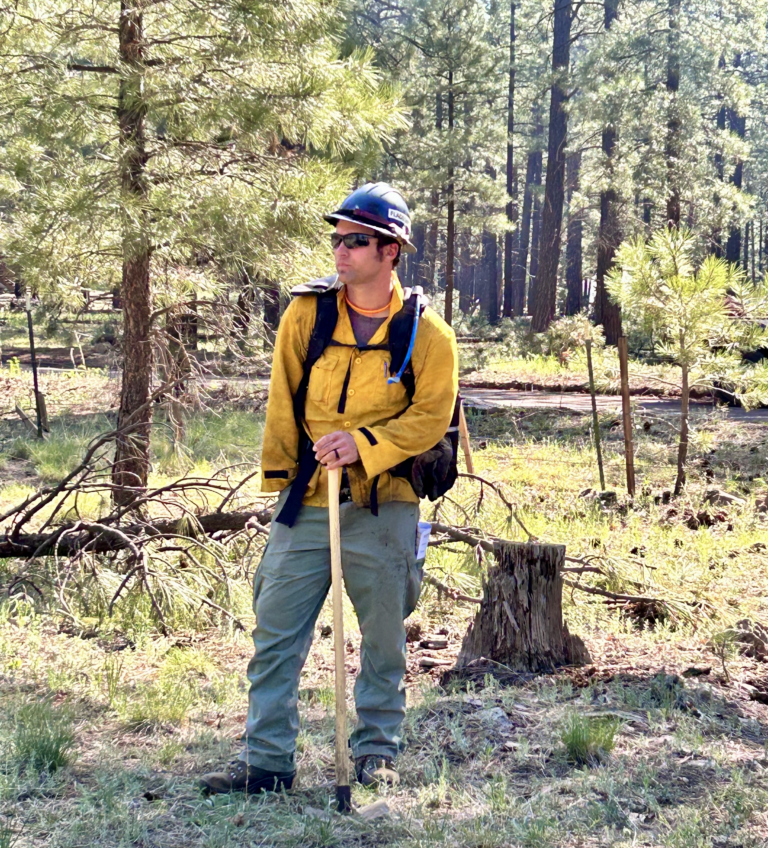
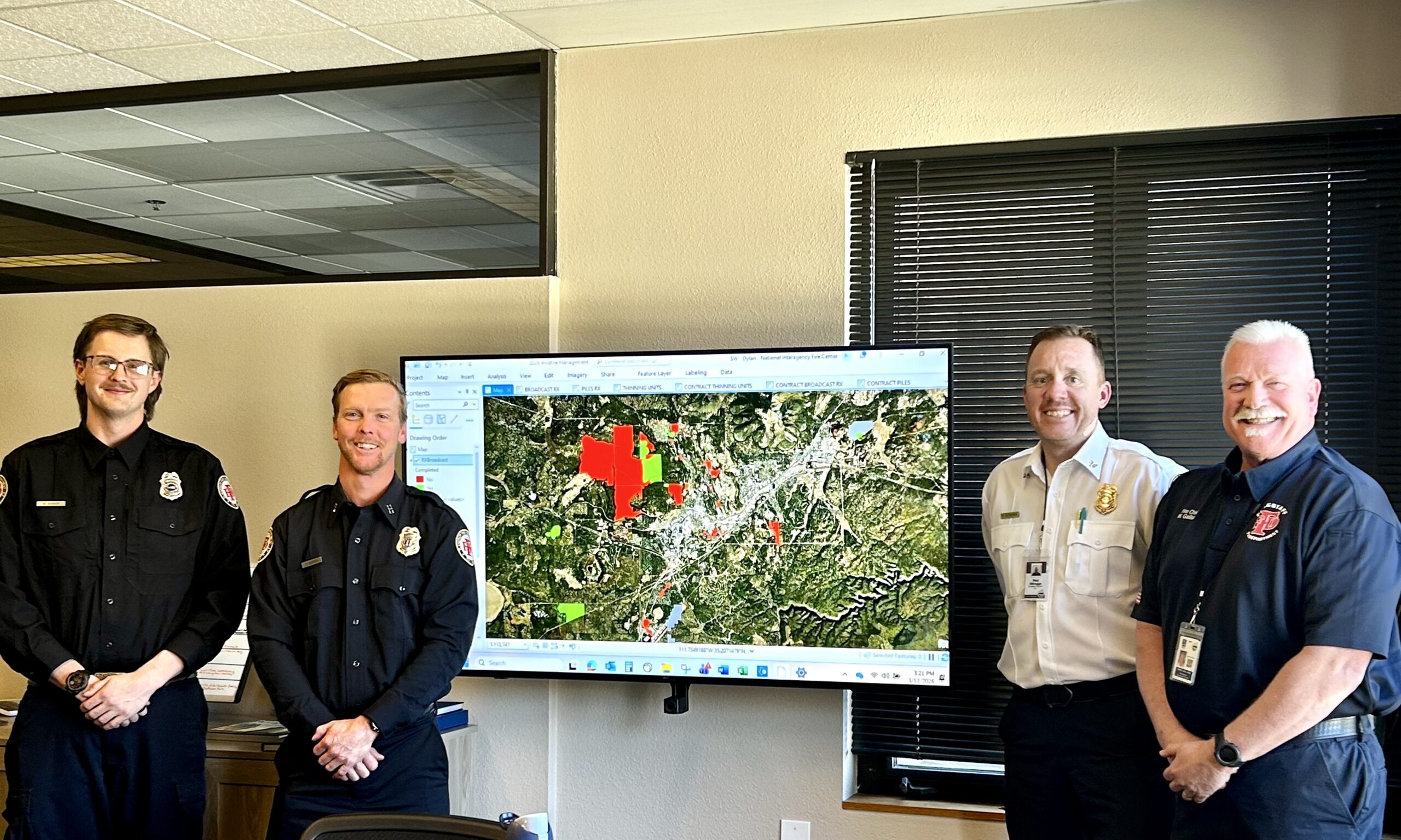
Unsurprisingly, the three-month weather outlook shows northern Arizona likely above normal temperatures and below monthly precipitation. As preparation for writing this column, I met with Flagstaff Fire Chief Mark Gaillard, Wildland Fire Battalion Chief Paul Oltrogge, Wildland Fire Community Health Specialist Noah Baker, and Wildland Fire Operations Captain Dylan Guffey. I was relieved to learn about the extensive communication and partnerships the Flagstaff Fire Department has with surrounding agencies. I hope it brings Flagstaff residents some comfort as well.
I asked our wildland fire staff about factors that inform fire restriction stages and ultimately the closing of the forests to the public. I often hear from the public that they’re concerned the forests remain open when it seems that temperatures and lack of moisture might warrant forest closures. It turns out that the process is more complex than I had imagined. Land managers, including Coconino and Kaibab National Forests, closely monitor conditions on the ground and track data such as plant and soil moisture, recent land management activities such as forest thinning, and weather predictions. These land managers also coordinate with surrounding agencies to ensure communication about restrictions and closings is consistent and clear.
The FFD, USFS, and APS monitor “hot spots” in the forests by helicopter and advanced imaging technology. It was recently relayed to me that some APS technology spotted smoke from a small lightning-caused fire before anyone else. This is an important reminder of how important constant communication and collaboration are to our community’s safety.
The FFD’s ability to respond to wildland fire and other emergencies remains constant, regardless of weather conditions or outlook. For example, all FFD Fire stations are staffed with highly qualified wildland fire staff response units that are available 24/7. During high fire danger, additional crews (known as severity staffing) are added.
As I’ve written before, the nine full-time Wildland Fire Management Program staff have significant advanced wildland fire qualifications and experience, and each of the city’s 90 firefighters is trained and qualified in wildland fire. The FFD has worked strategically and methodically since 1997 to reduce the likelihood and severity of catastrophic wildland fire.
It’s now our turn, as residents, to do what we can to reduce the risk to ours—and our neighbors’—homes. The FFD has conducted 225 wildfire home assessments in the past 18 months. Have you scheduled a free assessment? I did and invited neighbors over to learn from our experts about steps we can take. A few suggestions made to me were to install tight mesh screens behind all my outside ducts to prevent embers from entering the crawlspaces above or below my home. Another suggestion was to remove wooden gates that touch my home and replace them with something nonflammable, such as a metal gate. Most important, according to the experts, is clearing all vegetation within five feet of your home. This creates a buffer zone should there be a nearby fire—whether residential or wildland.
Which brings me to pine needles. The city plans to place roll off dumpsters for pine needles and woody debris in select neighborhoods across Flagstaff: University Heights, Railroad Springs, Coconino Estates, and Country Club/Continental beginning in early to mid-April. These neighborhoods were selected based on a variety of risk factors including typical wind directions and proximity to the wildland-urban interface. Staff and the city council have heard the public’s frustration with decreased bulky trash pick-up schedules and understand that your new schedule might not align with your normal schedule of pine needle disposal. I’ve been keeping a small pile of filled garbage bags in my backyard and adding one or two to my bin each week as my residential trash is picked up.
The FFD is part of the City of Flagstaff’s Wildfire Resilient Homes Initiative (WRHI), an interdivision pilot program that is intended to drastically reduce barriers for our community regarding wildfire resilience. This program directly complements the fire department’s home assessments and provides residents with tools, kits, and funding to achieve wildfire resilience.
FFD is holding community meetings, and the next one will be held north of Flagstaff Medical Center in early April and after that in the Country Club area in early May. Keep an eye on local media, the city’s website, and social media for details.
By being proactive and working together, we each can reduce our risk of catastrophic wildland fire becoming a catastrophic neighborhood fire. We can work to protect each other and this community which we all love and choose to call home. As always, I’m available to Flagstaff residents via email.
Visit the City of Flagstaff’s “Be Ready Flagstaff” page, a one-stop-shop for resilience and disaster preparedness info: https://connect.flagstaffaz.gov/be-ready
To inquire about having a home assessment or to find out more about the WRHI, visit https://www.flagstaff.az.gov/5136/Wildfire-Resilient-Homes-Initiative-WRHI
Watch the City of Flagstaff/APS presentation on Public Safety Power Shutoffs (PSPS) from the March 17, 2026 city council meeting. The presentation begins at about the one-hour mark. https://www.youtube.com/live/U97wq0Hl0nY?si=USgpdF9RFq25CAjN
This column appears in the April 2026 edition of the Flagstaff Business News.