Extreme Weather Emergency Tour
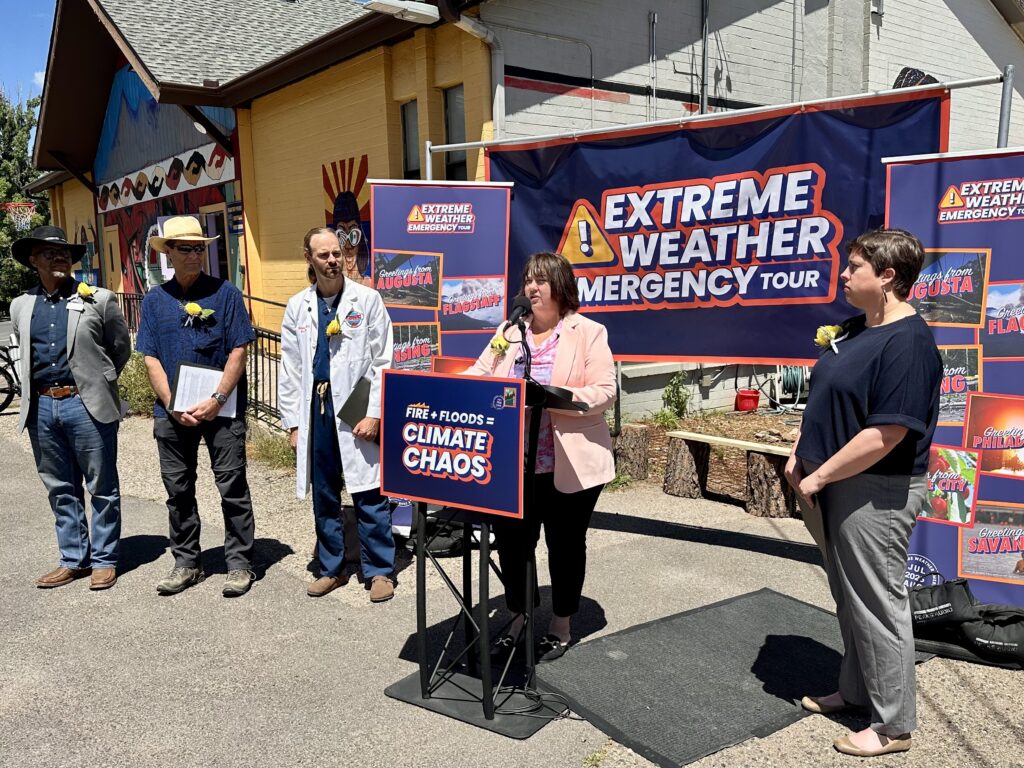
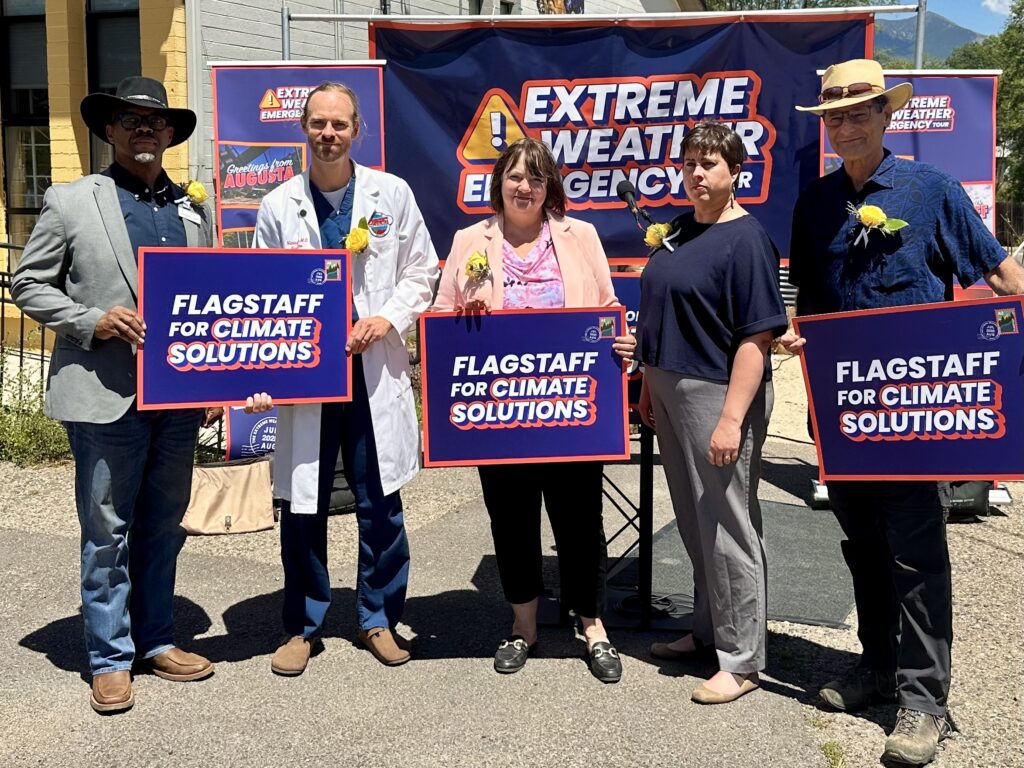
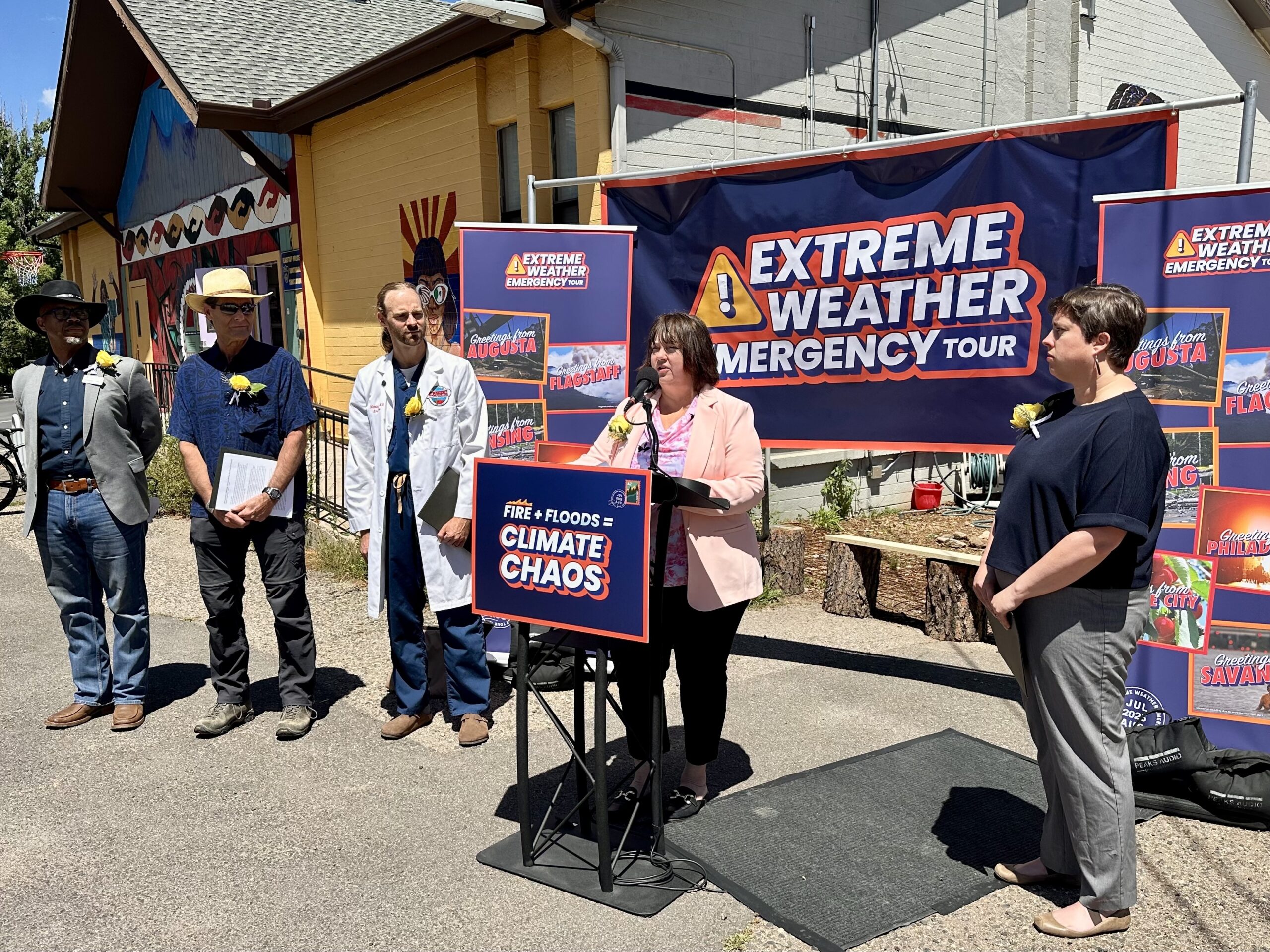
On July 23, the Climate Action Campaign hosted a press conference to discuss extreme weather impacts in Flagstaff. This was the latest stop on their Extreme Weather Emergency Tour. Speakers at the event: Kengatta Callen, Executive Director of the Southside Community Association; me; Sharon Tewksbury-Bloom, resident who experienced significant and repeated flooding following the Museum Fire; Nicolaus Hawbaker, local emergency room physician; and Stefan Sommer, board member of the Northern AZ Climate Change Alliance.
Below are my comments at the event.
Thank the Climate Action Campaign for this opportunity and to my fellow speakers for sharing their knowledge and concerns about extreme weather events
Local governments are on the front lines of emergency response. The city of Flagstaff and Coconino County have each spent millions of dollars on flood mitigation and waterline repairs as a result of the catastrophic Pipeline and Museum fires.
We have seen how catastrophic fires lead to dangerous flooding – disrupting lives and neighborhoods for years after the initial flames.
Flagstaff is deeply vulnerable to fire and flooding and our vulnerability grows with the increase in extreme and unpredictable weather events.
Prolonged drought in the Southwest has stressed our forests and has led to year-long fire risk.
This has been our reality and one of the reasons the city of Flagstaff has taken bold steps to address our vulnerabilities, strengthen the resilience of our neighborhoods, and help our residents take action to not only improve their quality of life, but to adapt to our increasingly unpredictable weather. One effort has been the creation of Resilience Hubs, one mobile and two in the Southside and Sunnyside neighborhoods. Despite the excellent work accomplished by these hubs—and the critical work still left to do—the EPA has rescinded the grant that was funding this work. We’ll continue to be proactive about helping our community prepare for emergencies, but the loss of this funding has had a significant impact on this important work.
Recently passed, the reconciliation bill cuts investments in clean energy. Arizona has been a leader in building a new economy around clean energy, but now our residents and institutions can expect higher energy costs and slowed business growth in several sectors. Cuts in tax credits will undoubtedly lead consumers to pull back spending on energy efficiency and clean energy.
Investments from the Inflation Reduction Act were helping us prepare for a changing future, helping to create jobs and emerging industries and now we’re taking a big step backward. Ignoring extreme and unpredictable weather caused by climate change leaves millions of people vulnerable. Our communities deserve better.
The reconciliation bill passed through the House by only four votes and all six of Arizona’s Republican representatives voted in support. Only Greg Stanton and Yassamin Ansari opposed this bad bill.
Back here in Flagstaff, we’ll stand together and figure out our next steps. I ask our elected representatives to stand with us. The people who will suffer most from climate inaction are those of us on the ground—the first responders, renters and homeowners, local businesses, the young/elderly/medically fragile—in other words—all of us.