Keeping Our Focus On Forest Health, Watershed Protection, Homeowners Insurance, and Federal Funding Help
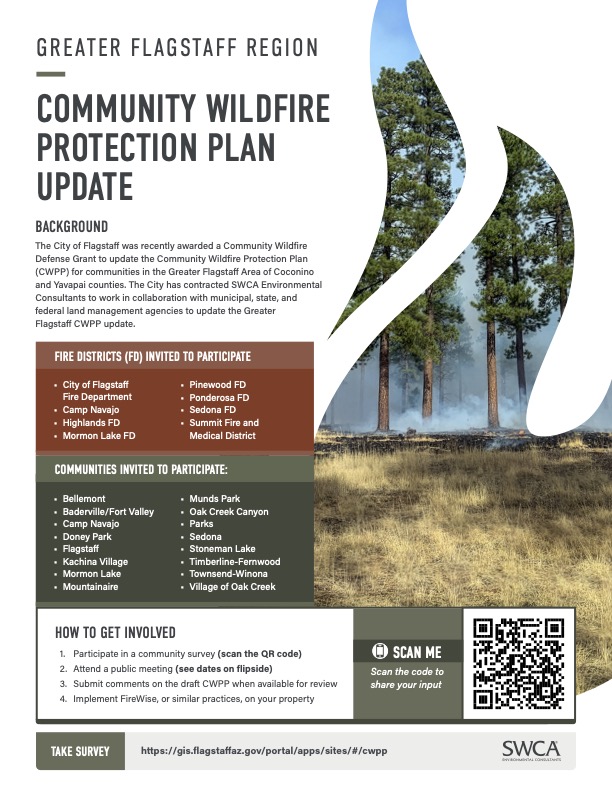
Rising insurance premiums, canceled policies, concern about Flagstaff’s water supply and quality, and risk of catastrophic wildland fire have been on our minds lately. City of Flagstaff leadership, including its fire department, have been concerned and active in strategies to prevent, or at least lessen the severity, of catastrophic fire since 1997.
In 2012, Flagstaff voters gave these efforts a boost when they approved a $10M bond to create the Flagstaff Watershed Protection Project (FWPP). This investment has attracted over $40 million from partner organizations and agencies to get significant forest restoration treatment work planned and completed, with more projects in the works. These treatments have focused on critical watersheds to reduce threats including diminished water quality and post-fire flooding. More than 14,000 acres have been restored with ecologically based, wildfire risk reduction thinning in FWPP priority areas.
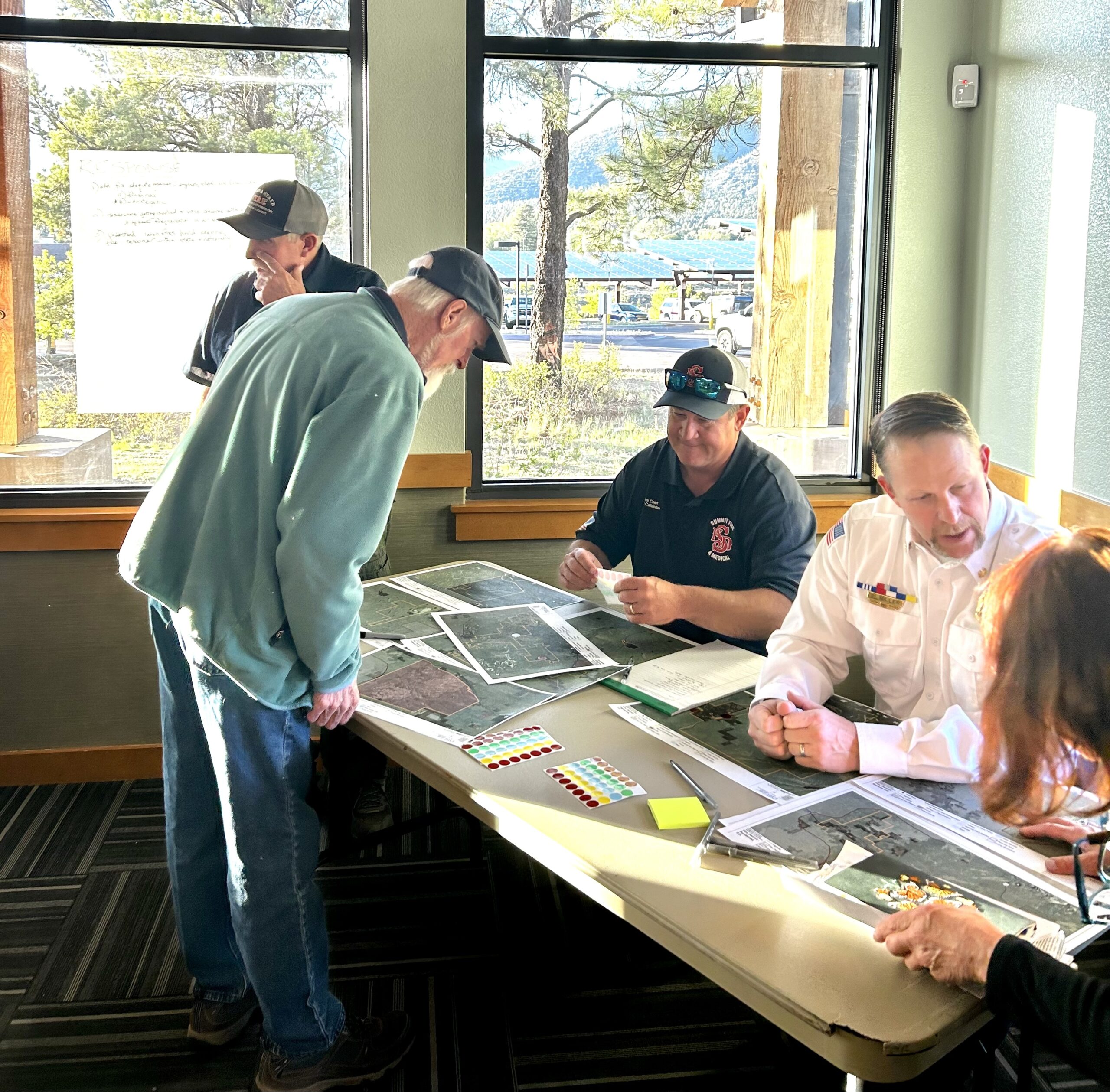
A large part of Flagstaff’s strategy for protection from destructive wildland fire involves many partners engaged in the planning of forest thinning treatments, prescribed fire, and wildfire response. Flagstaff Fire Department’s Wildland Fire Management Program and the Coconino National Forest coordinate response efforts year-round to keep our community as safe as possible. The coalition of those committed to helping keep our community safe also includes Summit Fire and Medical District, Highlands Fire District, Coconino County, Arizona Department of Forestry and Fire Management, Northern Arizona University, State Land Department, National Park Service, Bureau of Land Management, and Arizona Public Service.
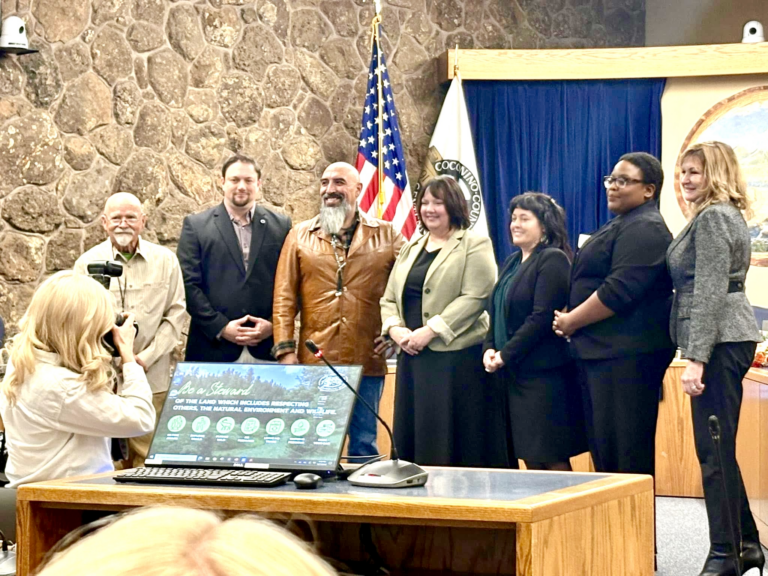
By the time you’re reading this, I will have returned from Washington D.C. where I and my colleagues advocated for funding to continue this vital work. I was joined by Councilmembers Anthony Garcia and Lori Matthews, City Manager Joanne Keene, and Assistant City Manager Shannon Anderson.
Our requests to Arizona’s delegation and the USDA Forest Service leadership:
- Allocate $5M for timber projects within the Flagstaff Watershed Protection Project as part of a $25M Four Forest Restoration Initiative (4FRI) funding commitment.
- Pass the Fix our Forests Act (FOFA) with a renewed focus on Community Wildfire Risk Reduction Programs that proactively address wildfire risk reduction actions and increase ignition resistance of the built environment.
- Make the Fire Funding Fix (FFF) permanent (it expires at the end of federal FY27). The FFF stabilizes federal fire budgets, eliminating the need to borrow from non-fire programs when they encounter suppression funding shortfalls. These changes mean land management agencies can focus on their mission-related priorities without worrying whether they will have the necessary resources to do so.
Among the local wildfire risk reduction work underway is forest thinning projects in Switzer Canyon, Ponderosa Trails, and Rio de Flag/Coconino Estates. Additional (mechanical and hand) thinning is planned for Sinclair Wash and the Jesse Gregg–Observatory Mesa connection. You may have seen smoke in the air from prescribed fire completed at Picture Canyon, Thorpe Park/Lowell Observatory, Switzer Canyon, and Ponderosa Trails. Expect some additional burns at Thorpe Park/Lowell Observatory, and Observatory Mesa.
Many Flagstaff residents have seen dramatic increases in their homeowner insurance premiums while some have had policies canceled. Paul Oltrogge, Wildland Fire Battalion Chief for the Flagstaff Fire Department, serves on the Fire Insurance Review Task Force—a statewide task force created by Arizona HB2054. On this task force, he brings forth the latest wildfire research and progress Flagstaff has made in reducing our risk of catastrophic fire and in turn is able to help implement the best available science learned from partner task force members in Flagstaff’s effort to reduce risk and maintain a strong insurance market for our residents.
Communities throughout Arizona and across the country are facing similar struggles with homeowners’ insurance as insurance companies make decisions about risk without necessarily possessing the latest on-the-ground data from communities. Flagstaff has an ongoing wildfire research partnership with the Insurance Institute for Business & Home Safety (IBHS). According to their website, “IBHS’s groundbreaking research is closing gaps in building science to strengthen the nation’s resilience against the growing threat of severe weather and wildfire, bringing science to life, educating audiences, and driving change.”
Wildland Urban Interface (WUI) codes are being updated to align with the latest wildfire science as the City of Flagstaff also examines it’s building and zoning codes to align with the same. Governor Hobbs and her staff are also involved—working to bring some financial and wildland fire threat relief to residents.
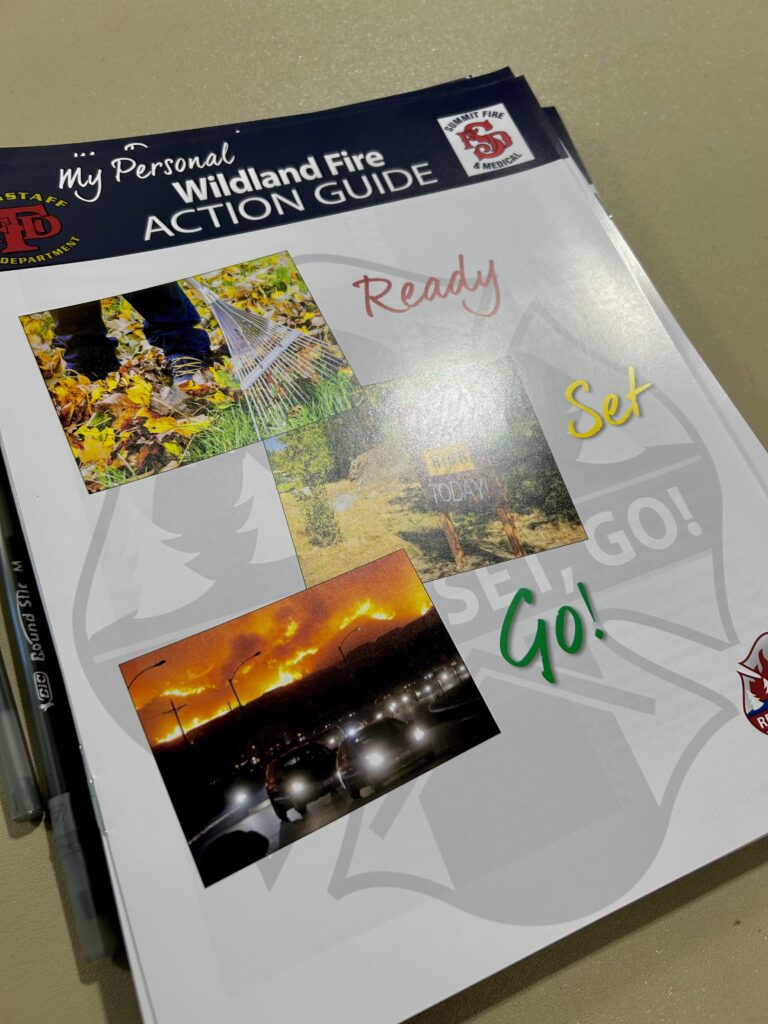
Reducing the threat of catastrophic wildland fire is a top priority for me, Flagstaff’s city council, city leadership, and of course, the Flagstaff Fire Department. A day doesn’t go by that we’re not studying, meeting, discussing, planning, and working in the forest to ensure that you and your family are as safe as possible. You can help by clearing vegetation within five feet of your home, being careful with fire, and by helping your neighbors do the same. As always, I’m available to Flagstaff residents.
Visit the City of Flagstaff’s “Be Ready Flagstaff” page, a one-stop-shop for resilience and disaster preparedness info: https://connect.flagstaffaz.gov/be-ready
To inquire about having a home assessment or to find out more about the Wildfire Resilient Homes Initiative (WRHI), visit https://www.flagstaff.az.gov/5136/Wildfire-Resilient-Homes-Initiative-WRHI
Watch city council meetings, search agendas and minutes for keywords, and more at https://www.flagstaff.az.gov/991/Agendas-Minutes
This column originally appeared in the May edition of the Flagstaff Business News.